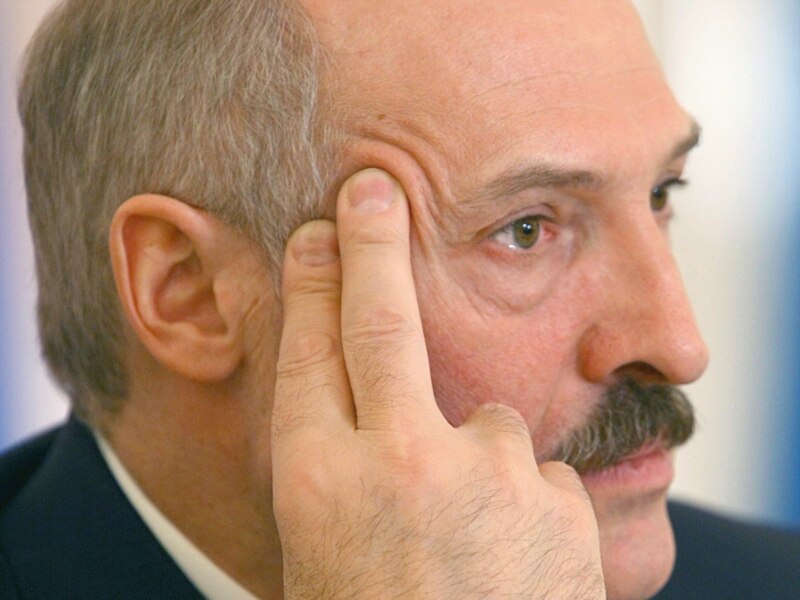
The latest evaluation report on Belarus was published by the
Jameston Foundation. Shortly: the chances to topple
Lukashenko soon are quite slim - he's still enjoying the support of the population -
question 1: how accurate could be such evaluation, in a country where being against the regime is endangering the individual freedom ? - and of an emergent third class. The West
opened again -
question 2: does it sounds like: "I punished you because you haven't been polite, but now I decided to finish the punishment, because you haven't become more polite by that"? - even cautiously, while
Lukashenko is hoping in a Chinese solution to his problems - centralized government, but in a focus for profit economic environment.
The
opposition in Belarus is extremely diverse and weak, in a country at the mercy of Russia's
changing mood. Only during the shorts laps of time when they are tensions between Minsk and Moscow, the Belarusian leaders try to look more
friendly to the
generically West.
In fact, the minimum sources required for having at least an
approximate realistic idea of how the country is really looking are quite scattered and
often contradictory. The academic researches are quite a few (David
Marples'
A Denationalized Nation is a good reference for the process of identity building, as Elena
Korosteleva's Postcommunist Belarus, are valuable for the analysis of the authoritarian model and the wavering relations
between Russia and the West). The scarcity of academic resources could be interpreted as well as a certain lack of immediate interest of European and American universities and think-thanks in covering this part of the world.
For a trustworthy action you have to know what are you talking about and with whom. The opposition is still in Belarus a generically term lacking high profile leaders so, it is problematic if, in the case that a change of leadership will occurs, who will be able to fully assume the main positions in a possible government - foreign affairs, justice, economy, army.
The post-orange revolutions' ambiguities in Ukraine and Georgia could be a reason for a cautious approach of both EU and US in relationship with Belarus. But the neighbouring Russia is another element that most be taken into consideration when thinking about a not too soon foreseeable "new Belarus", limiting considerably the possibility of an open action of state and non-state actors.
EU's Czech presidency, starting January 1 is promising to focus on Belarus too. In the same time, it's impossible to think about wonders in only six months time, and the current economic and financial crisis would continue to top the agenda. And, in fact, what could you offer to Belarus?
The international community is facing a situation typical to the Cold War, which should be addressed differently, but not yet clearly how. The enthusiastic revolutions of the 1989s, the liberation from communism of the "Eastern block" and the reunification of Germany, were followed shortly but difficult stick-and-carrot games and the EU and NATO memberships incentives were the salvation at the end of complicate transitions, schizophrenic positioning to human rights issues and a confusing, far from democratic behavior of a colourful political class. Almost 20 years after, they are not fully functional societies or are facing a serious shortage in terms of political leadership. Plus, in all of the former communist countries was common at a certain degree (including in Eastern Germany, the "
Good Bye, Lenin" movie reflecting, in an ironic way this mentality split) the "nostalgia" after a period of a period
idyllically considered as secure, at least in economic terms, translated into support for nationalistic, far-right politicians. But still, they are on the good track and their lessons learned are already taught in the Western Balkans, the new team preparing to get the European brand.
But, the choices are limited, as long the EU and NATO themselves are still in the need for a new organisational settlement and the geographical, political and economic resources are quite limited. You could talk about more need for democracy and the basic requirement to offer to your citizens their full enjoyment of human rights, to offer loans and training for democratic leaders and settlement of institutions or fight against corruption. Even to start a war against dictatorships, but the next day after the end of the battle, what you can really do?
We could identify quite easily the bad leaders and the bad political leaders. We cannot have one and only democracy, available anytime and universal; they are universal rights and freedom each democratic system have to enshrine and respect. It's up to the respective leadership of each country to find its own democratic path.